From Cinema to Composite: Vinci Weng’s Enchanted Approach to Digital Photography

At the Future Art & Design Award UK 2025 Winter Season, Vinci Weng | VINCI WENG Studio for digital fine art was awarded the Gold Prize in the category of Digital Composite Photography – Conceptual / Experimental for the work The Enchanted Joylands – Elysium-I.

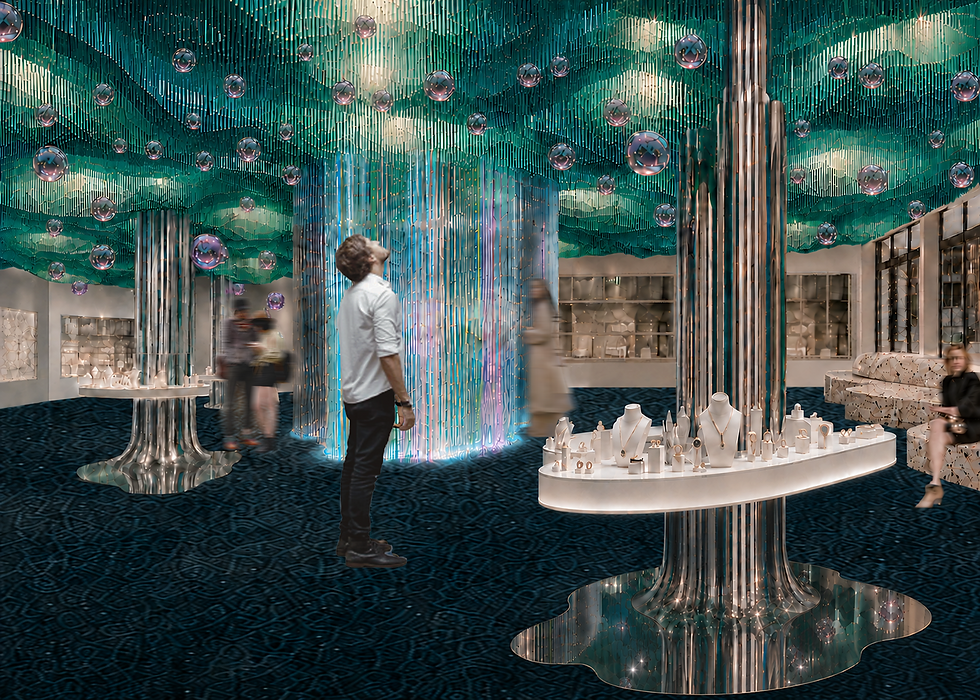
Blending photographic realism with painterly poetics, Elysium-I is part of Weng’s ongoing digital fine art series The Enchanted Joylands—a project that draws inspiration from cinematic staging, classical Chinese pictorial aesthetics, and contemporary visual culture. Constructed entirely from the artist’s own photographs and meticulous post-production, the work rejects AI generation in favor of a deeply crafted process that reimagines photography as a site of illusion, imagination, and narrative possibility.
Rather than depicting a specific location, Elysium-I presents a fictional paradise—an internal landscape where Eastern and Western visual traditions, realism and surrealism, and physical and dreamlike realities gradually converge. The result is a cinematic image that invites viewers to linger, question, and construct their own stories within its enchanted world.
Interview
Q: What initially inspired this project? Was there a particular idea, moment, or question that sparked its creation?
Vinci: I believe that our imaginations reveal different realities when we take a longer look at the details within photographic work. As a digital fine artist, I observe the world closely and often turn to painting, photography, and cinema for creative inspiration in storytelling. I am also inspired by looking ahead — questioning what it is about the dramatic stage that stimulates my creativity and evokes a sense of inspiration.
The winning work, Elysium-I, is part of my current project, The Enchanted Joyland. This project was initially inspired by cinematic staging and specific ideas drawn from classical Chinese pictorial aesthetics, as well as contemporary painting and photography. My recent work focuses on rethinking the ‘cinematographic’ image, presenting a dialogue between Eastern and Western pictorial concepts while exploring the relationship between realism and surrealism. The Joyland emerges from internal and surreal landscapes, reflecting illusion and Eastern aesthetics. It is a fantastical setting within a fictional universe, often inspired by the real world, yet without a specific place or location. This project re-imagines traditional notions of poetic fantasy and escapism. The concept extends to fictional paradises, presenting ‘dreamlike reality’ and ‘physical reality’ as two layers that gradually unify into one.
Seeing, exploring, and knowing are the principal references that have sparked the creation of fictional landscapes in my digital composite photography. I enjoy watching films that fascinate me with their imaginative ideas and cinematic glamour, and I strive to translate these qualities into my images. I believe that painting, photography, and film share a complex yet rich relationship. The visual sources around me are constantly transformed into my own visual language through both mental processes and the technological tools available to me. This project has been a remarkable journey of exploration, and I feel there is still much more to be done. It has set me on a path of imagination — one that I continue to follow, always in search of new wonderlands.
Q: What was the most exciting or most challenging aspect of bringing this work to life?
Vinci: This project began as a personal challenge to explore how far photographic editing technology could be pushed. It centres on methods and techniques of image-making that combine photographic skill, digital technology, and painterly concepts. At the outset, I spent several weeks observing different locations and capturing hundreds of high-resolution images, which served as essential sources and stimuli for creating seamless photomontages. I did not use AI-generated tools or stock images; instead, I relied entirely on complex manipulations of my own photographs taken on location. My ideas, planning, post-production, and photographic process were all carefully integrated to achieve the visual strength of the final work.
The working process is painstaking and often takes several months to complete a large-scale piece. Viewers are able to appreciate in detail how I manipulate the enchanted image, balancing photographic realism with pictorial poetics. I believe the most exciting moment is when the work takes shape and the visual form aligns perfectly with the intended storytelling. The final image is produced using Giclée fine art printing on top-grade archival papers, allowing the viewer to experience the work as a cinematic image. For me, the picture evokes curiosity about the nature of illusion; however, I hope the audience is free to create their own narratives, without being told what my story is.
Q: How was your experience taking part in the Future Art & Design Award UK?
Vinci: For me, this was a significant achievement and a wonderful experience to take part in the Award, which I consider to be an excellent platform for showcasing my new work on a global scale.
In terms of developing my professional artistic career, it not only makes a substantial difference at a professional level but also serves as strong motivation for developing new ideas for my future projects.
Follow the Designer
Website: https://www.vinciweng.com
Dr. Vinci Weng, a distinguished artist and professor of fine art, has garnered attention for his innovative approach to visual storytelling. His work rethinks the concept of a ‘cinematographic’ picture, seamlessly blending East-West pictorial traditions while navigating the boundaries between realism and surrealism. Weng’s images transcend specific locations or venues, presenting a fantastical world of their own, characterized by an intriguing organization of fields, depths, scales, and colours. These fictional universes, often inspired by real-world elements, invite viewers into magical events and wonder tales of utopia, where natural and artificial realities coexist harmoniously.

Weng’s artistic philosophy revolves around creating images that transcend conventional boundaries and invite viewers into a world where reality and fantasy intertwine. His approach involves meticulous attention to detail, sophisticated use of colour and composition, and a deep understanding of both Eastern and Western artistic traditions. By rethinking the ‘cinematographic’ picture, Weng seeks to create a unique visual language that captures the imagination and evokes a sense of wonder and curiosity. His works are characterized by their ability to convey complex narratives and emotions, drawing viewers into his meticulously crafted fictional landscapes.
Entering Vinci Weng's recent work feels less like arriving at an image than like stepping into a constructed situation that is already underway. The first sensation is not simply visual plenitude, though plenitude is everywhere, but a peculiar certainty that what one is seeing has been staged into existence with the deliberation of cinema and the density of painting. Weng's pictures do not present themselves as windows, nor as documents, nor as the familiar persuasion of photographic immediacy. They behave instead as tableaux with rules, as fictional worlds whose internal physics are established through scale, depth, and chromatic climate.
Weng does not use AI-generated tools nor stock images, instead relying solely on complex manipulations of his own photographic images captured on location. His ideas, planning, post-production, and photographs are all seamlessly integrated to achieve the visual strength of the final result. The working process is painstaking and often takes several months to produce a large-scale work. His work has been featured in awards/exhibitions at numerous international galleries, museums, and festivals, including Siena Awards Festival (Italy), Royal Albert Hall (London), Glasgow Gallery of Photography (UK), Association of Photographers Gallery (London), Business Design Centre (London), Royal West of England Academy (UK), Aberystwyth Arts Centre (UK), Blank Wall Gallery (Athens), YellowKorner Art Photography (Paris), Sotheby’s Amsterdam Gallery (Amsterdam), Centre for Contemporary Art MARS (Moscow), Centre for Fine Art Photography Fort Collins (USA), National Taiwan Museum of Fine Arts, Taipei Fine Arts Museum, and Kaohsiung Museum of Fine Arts (Taiwan), as well as being included in the RPS International Print Exhibitions from 2013 to 2016 (UK). He was awarded the Future Art & Design Award 2025 – Gold Prize (UK); The Homiens Art Prize 2025 - Highly Commended (New York); International Color Awards 2025 – Merit of Excellence (USA); The LICC 2024 – Create-Art Shortlist (UK); Digital Manipulation Award 2025 – Black & White Magazine (USA); Discovery of the Year at the reFocus Awards – World Photo Annual 2024 (New York); Monochrome Awards 2024 (London); Siena Creative Photo Awards 2024 (Italy); 1839 Awards 2024 (New York); The Persona Art Honours 2024 (Spain); MUSE Photography Awards 2023~2025 (New York); Chromatic Awards 2017–2023 (London); Fine Art Photography Awards 2015–2023 (London); The Lumen Prize 2012 (UK); and Peterborough Prize 2001 (UK), among many others.