
From Sensation to Memory: An Oil Painting Shaped by Nature

CHUANG CHING WEN has been awarded the Platinum Prize in Oil Painting at the Future Art & Design Award UK 2025 Winter Season, for the work 4/7 Late Spring; Fa-Tzu River in the Morning.
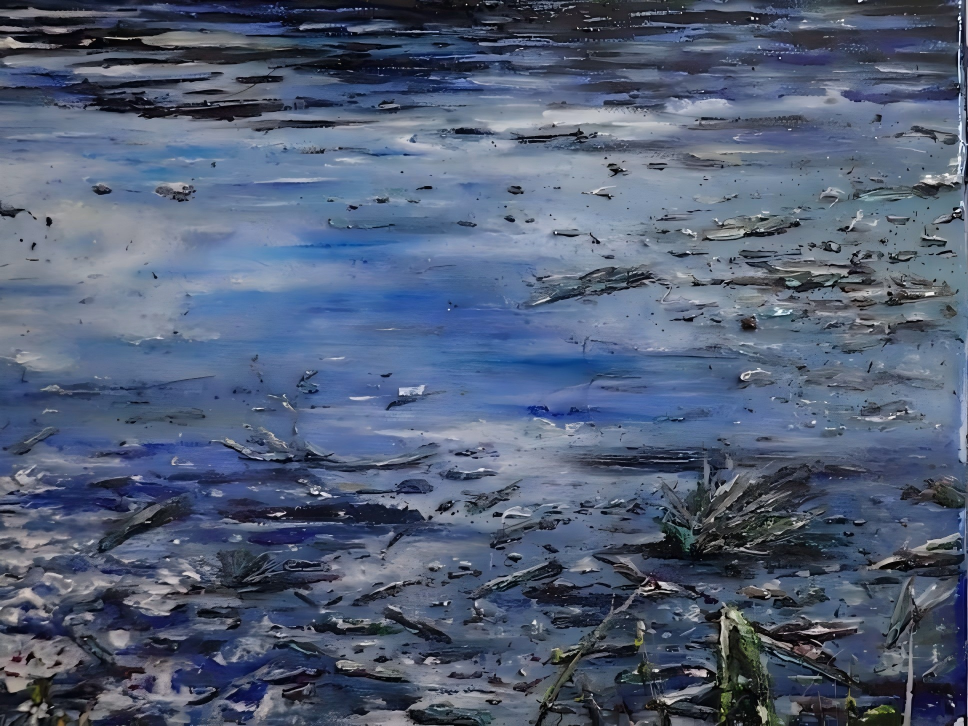
Created during a period of personal pause and emotional exhaustion, the painting emerges from an intimate encounter with nature along Taiwan’s Fa-Tzu River. Rather than depicting a landscape as scenery, the work becomes a vessel for sensation, memory, and recovery—where time, emotion, and natural rhythm quietly accumulate layer by layer. Through restrained gestures and intuitive growth, the painting reflects not only a moment in late spring, but a deeper process of healing, attention, and resilience.
"I am truly grateful for this beautiful experience, and for the judges’
thoughtful comments. While reading them, I felt genuinely listened to — as if
the judges paused and spent time with the language, emotions, and
landscape inside my painting, “4/7 Late Spring; Fa-Tzu River in the Morning.”
It means a lot to me."

Interview with Ching Wen
Q: What initially inspired this project? Was there a particular idea, moment, or question that sparked its creation?
Ching Wen: At that time, I had taken a break from my graduate studies and had just left my job. I felt exhausted and emotionally low, so I decided to pause and give myself space to understand and reorganize my life.
One day, when spring was slowly turning into summer, I went to the Fa-Tzu River to rest. I walked through a small area of grass and trees and sat near the water. Around me there were only plants, sunlight, and the quiet sound of the river — I still remember the temperature of that moment, and even the bees gently buzzing nearby.
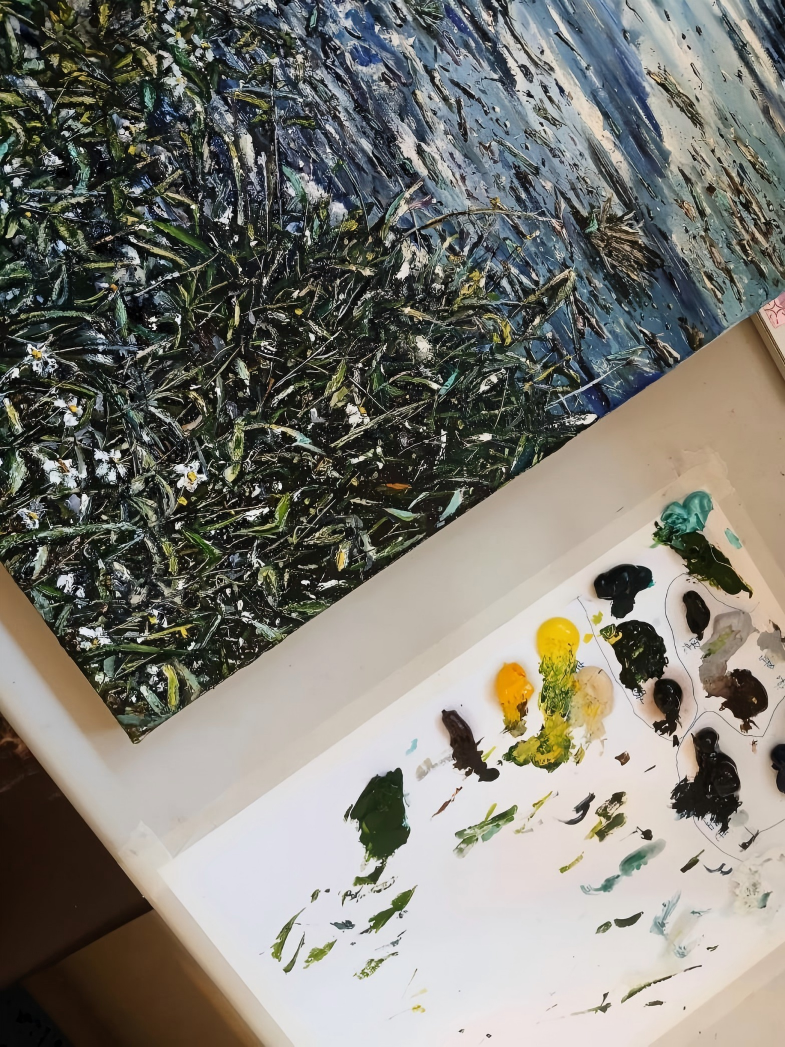
I set down my brush, closed my eyes, and tried to feel everything with my senses — sight, touch, sound, smell, and my own breathing. I only painted a few strokes on site. The rest of the work grew later, through memory, photographs, and the images inside my mind.
I wanted to keep that quiet feeling — of being held by nature — inside the painting, one stroke at a time.
Q: What was the most exciting or most challenging aspect of bringing this work to life?
Ching Wen: The biggest challenge was remembering the sensations outdoors, and then slowly painting them indoors.
The wind, the temperature, the humidity, and my own body all changed from day to day. So this painting became many layers of emotions and time. I used half rational thinking for composition and color decisions, and half intuition to guide the process.
During graduate school, I briefly studied concepts such as fractals and self-similar patterns in nature. I realized that grasses really do grow like that — layer by layer, expanding outward. I brought this understanding into the work, while still allowing the painting to stay free.
Through this process, art helped me release anxiety and pressure, and allowed both myself and the painting to grow freely. That was deeply healing.
Q: How was your experience taking part in the Future Art & Design Award UK?
Ching Wen: I rarely join competitions, and this was my first time.
I did not expect to win — I simply wanted to see where I was in my artistic journey, and to encourage myself a little.
More importantly, I hoped to be understood —
for someone to feel the emotions inside the work.
I also wanted to share a piece of Taiwan — not only its beauty, but also its traces, resilience, and ability to rise again. Like the grasses in the painting, every plant deserves light. Each one matters, and each one grows with strength.
Receiving this award makes me deeply grateful and moved.


