
Illumination Geometry: Reframing the Ordinary Through Light and Structure

At the World Grand Prix Photography Award 2026 Spring Season, Yin Zhi, Wu was awarded the Platinum Award for Illumination Geometry, a work that redefines how we perceive everyday environments through light, rhythm, and structure.
Emerging from a background in graphic design, the photograph transforms a simple tiled surface into a study of repetition, balance, and illumination. Through careful observation, the work elevates the overlooked—revealing that abstraction is not something constructed, but something already present in the world, waiting to be seen.
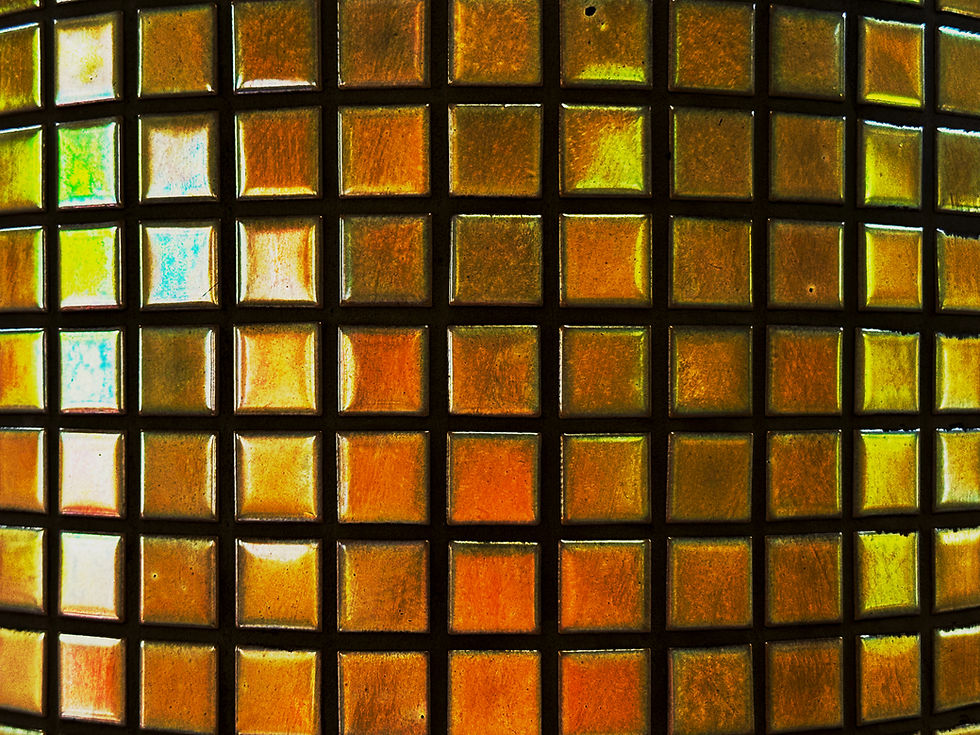
This photograph explores the rhythm created by repetition, light, and texture.
A grid of ceramic tiles becomes a visual field where subtle differences in reflection and color create an unexpected harmony. Each square captures light in its own way, transforming an ordinary surface into an abstract composition of glowing fragments.
Through the interplay of geometry and illumination, the image invites viewers to reconsider the beauty hidden within everyday materials.
Interview
Q1. What inspired you to take this award-winning photo? Is there a story behind the piece you’d like to share?
Wu:
I’m truly honored to have received the Platinum Award, especially since this was my first time entering an international photography competition.
The reason I entered was actually quite playful—even a little spontaneous. A photographer friend of mine won Platinum at BPA last year, and I jokingly thought, “Okay, maybe I should try entering an international competition too.” Around that time, I saw that WGPPA was open for submissions, so I decided to give it a try, without expecting this level of recognition.
On a deeper level, however, this work comes from my background in graphic design. In my school, we constantly discuss the principles of visual aesthetics—repetition, order, rhythm, and balance. Many people understand these concepts theoretically, but I’ve always been interested in putting them into practice through actual creation, and that became an important starting point for this work.
I chose to photograph ceramic tiles because I wanted to document things we encounter in everyday life but often overlook, and to capture a fleeting moment of beauty within them. Through light, an ordinary tiled surface transformed into a structure of geometry, rhythm, and illumination, which became the origin of "Illumination Geometry".
For me, this image is not only an abstract photograph, but also a way of seeing—a rediscovery of the beauty that already exists in the ordinary.
Q2. Were there any challenges during the process of creating this series or image? How did you navigate them?
Wu:
As I mentioned earlier, one of the biggest challenges of this work came from the subject itself—its ordinariness. Ceramic tiles are common, everyday objects that people often overlook. The real challenge was not photographing them, but finding a way to transform something ordinary into something extraordinary—to use composition, perception, and light to create a new visual experience. That was the central challenge in both selecting the subject and creating the image.
Another challenge came from my own position as a young creator. As a vocational high school student, this was my first international photography competition, and I was competing with photographers from around the world, across all ages and levels of experience. For me, that was not only a technical challenge, but also a psychological one.
My way of overcoming both was actually very simple: don’t assume something is impossible before you try. Just do it.
"Just do it, Anything is possible."
Sometimes creation doesn’t begin when you feel fully ready—it begins when you dare to start, and discover possibilities through the process.
Q3. How do you approach the balance between technical skill and emotional/artistic expression in your photography?
Wu:
I believe that within the East Asian educational environment I grew up in, what school has given me is technique—an understanding of form, method, structure, and how to bring a work to completion.
But I think so, that just a part of basic. In my view, creation is not only about demonstrating technique . It is also about expressing what I want to communicate. Even if those ideas are not always fully understood or recognized, that is what I consider art.
In this work, I tried to take something from both: using technique to build structure, and using artistic expression to preserve meaning, then allowing the two to reach a kind of balance within the image.
I wouldn’t claim this is the only right approach, but it is my approach—and perhaps the way my own style is beginning to form.
Q4. What message or feeling do you hope your photography conveys to viewers?
Wu:
In Taiwan, people always say the urban environment is unattractive, or even that Taiwan is not a place associated with beauty. But I have always wondered whether it is not a lack of beauty, but rather that we have become so accustomed to our surroundings that we no longer notice it.
Through this work, I hope to remind people to look again at the ordinary things they take for granted. Even a simple tiled wall can contain order, light, rhythm, and a kind of beauty waiting to be discovered.
At the same time, I want this image to say something beyond Taiwan—that beauty exists everywhere in daily life, but it requires careful observation and a willingness to see.
If viewers, after seeing this photograph, begin to look differently at the familiar environments around them, then I would feel the work has achieved its purpose.
"The ordinary can become extraordinary, but the extraordinary ultimately comes from the ordinary."
Q5. In your view, what role does photography play in today’s world?
Wu:
In today’s wave of AI and increasing digitalization, people have become more accustomed to experiencing the world through screens, while becoming less likely to truly see things for themselves.
Because of this, I believe the meaning of photography is no longer only about preserving memories or recording images. For me, photography has become a way of relearning how to see. It invites people to step outside, use their own eyes, reconnect with the physical world, and seek out the extraordinary hidden within ordinary life.
If photography can restore our capacity to observe, to pause, and to feel, then it is more than image-making—it becomes a way of reconnecting people with the world itself.
Editor’s Note
In Illumination Geometry, Yin Zhi, Wu demonstrates that abstraction is not an escape from reality—but a deeper engagement with it.
By revealing structure, rhythm, and light within the everyday, the work invites viewers to reconsider what they overlook. It is a reminder that the extraordinary is not elsewhere—it is already present, waiting to be seen.
Follow the Photographer
YIN ZHI, WU (2008 -)
2023 World skills Asia GD(J) - gold medal
2024 Taiwan skills N.aera 3D - excellence
Now. A students (high School)
Now. ACGNCRPA - graphicdesigner
Now. Taipei Yongjing Fdn. - photographyer
Now. Gemini educator certification

…
Skills:
3D game arts, Manga illustration, company identity system design, experimental art
…
Personal Note:
English isn't my superpower (yet), but I hope a suitable university, college or graduate school to claim me!
By the way, I also hope to have the opportunity to participate in international student collaborations or new business projects.
...
Collab DM:
Instagram:Inch_0714


